The only coffee roasters
ETHIOPIA - KABIRA(ORGANIC)(COMING SOON)
ETHIOPIA - KABIRA(ORGANIC)(COMING SOON)
Couldn't load pickup availability
CUP PROFILE // BLUEBERRY - BANANA MUFFIN // BLACK TEA - MILK CHOCOLATE
ORIGIN // ETHIOPIA
REGION // JAMMA, WEST ETHIOPIA
FARM // KABIRA
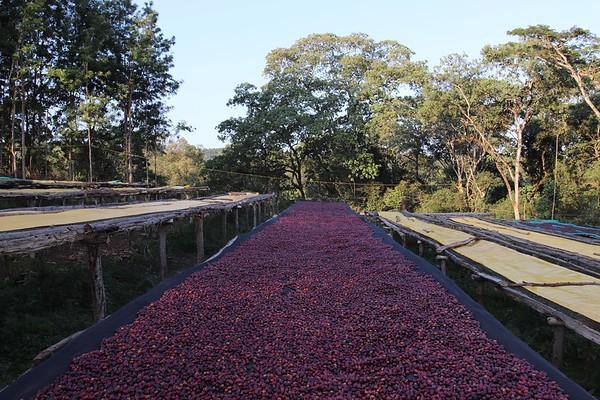
PROCESS // NATURAL
ALTITUDE 2000 - 2200 MASL
CUP SCORE // 86
This coffee is produced by Mustefa Abakeno, a smallholder farmer and exporter based in the Jimma Zone of western Ethiopia. Mustefa manages an 18-hectare farm located at approximately 2,040 metres above sea level. His farm is planted with a range of coffee varieties sourced from the Jimma Agricultural Research Centre, reflecting both the region’s coffee heritage and ongoing work to improve quality and productivity.
Mustefa began by investing in a three-disc coffee pulper, allowing him to process part of his harvest as fully washed coffee. This marked an important step in developing greater control over post-harvest processing and improving consistency across his lots. In 2018, following regulatory changes in Ethiopia that allowed producers to export directly, Mustefa began working as an exporter and established the Beshasha wet mill. The station processes coffee from Mustefa’s own farm as well as cherry delivered by neighbouring outgrowers, who typically manage farms ranging from around four to ten hectares.
Mustefa’s work with Falcon in Addis Ababa has focused on improving coffee quality through direct collaboration across cherry selection, drying, lot separation and farm management. This relationship has also helped create a more direct supply chain, supporting stronger returns to producers and greater traceability for buyers.
In 2021, agronomist Harun joined the Falcon team and began working closely with Mustefa and the farmers supplying cherry to the washing station. His work has included training and support at farm and station level, with a focus on good agricultural practices, improved cherry selection and more consistent drying. Improvements at the station have included the use of shade netting to protect drying beds during the hottest hours of the day, tighter cherry selection at delivery, tagging day lots for separation and regular monitoring of moisture levels before lot assembly.
Mustefa also maintains a small field lab equipped with a Sinar moisture reader, acquired in 2020. This allows parchment and dried coffee to be checked carefully before storage, supporting greater consistency in the warehouse. Dried day lots are assessed and graded according to quality and cup profile before being assembled.
For washed coffees, cherries are delivered and floated to remove immature or lower-density fruit before pulping. The pulped coffee is fermented in tanks for around eight to twelve hours, then washed and cleaned through channels, where floating parchment is separated. The coffee is then skin-dried under shade while still wet, which allows visible defects to be removed more easily. After this initial stage, the coffee is moved to raised drying beds and dried for around seven to ten days. During the hottest part of the day, typically between 11:00 and 14:00, the beds are covered with shade netting to protect the coffee and support more even drying.
For natural coffees, cherries are delivered and floated to remove immature or lower-density fruit. The coffee is then skin-dried under shade for one day before being moved to raised beds, where it dries for around 20 to 30 days depending on weather conditions. Regular turning and careful moisture monitoring are used to support even drying and reduce the risk of spoilage.
Mustefa has continued to invest in infrastructure to support quality and growth. He has built a modern warehouse in Agaro with facilities for milling natural processed coffees, strengthening his control over post-harvest preparation. During the 2022 off-season, he also acquired four additional purchasing sites: Echamo, Jarso, Badeyi and Saadi. These sites act as collection points where cherries are selected and purchased from neighbouring farmers before being transported to the main processing stations at Beshasha and Kabira.
The Birbisa lot sits within this broader supply structure, reflecting Mustefa’s focus on selective cherry purchasing, careful processing and direct relationships with nearby farmers. His continued investment in processing, drying, moisture control and farmer training supports both coffee quality and the development of the surrounding coffee-growing communities.
Share